Worldlight

Follows your device

Sign in Design my journey
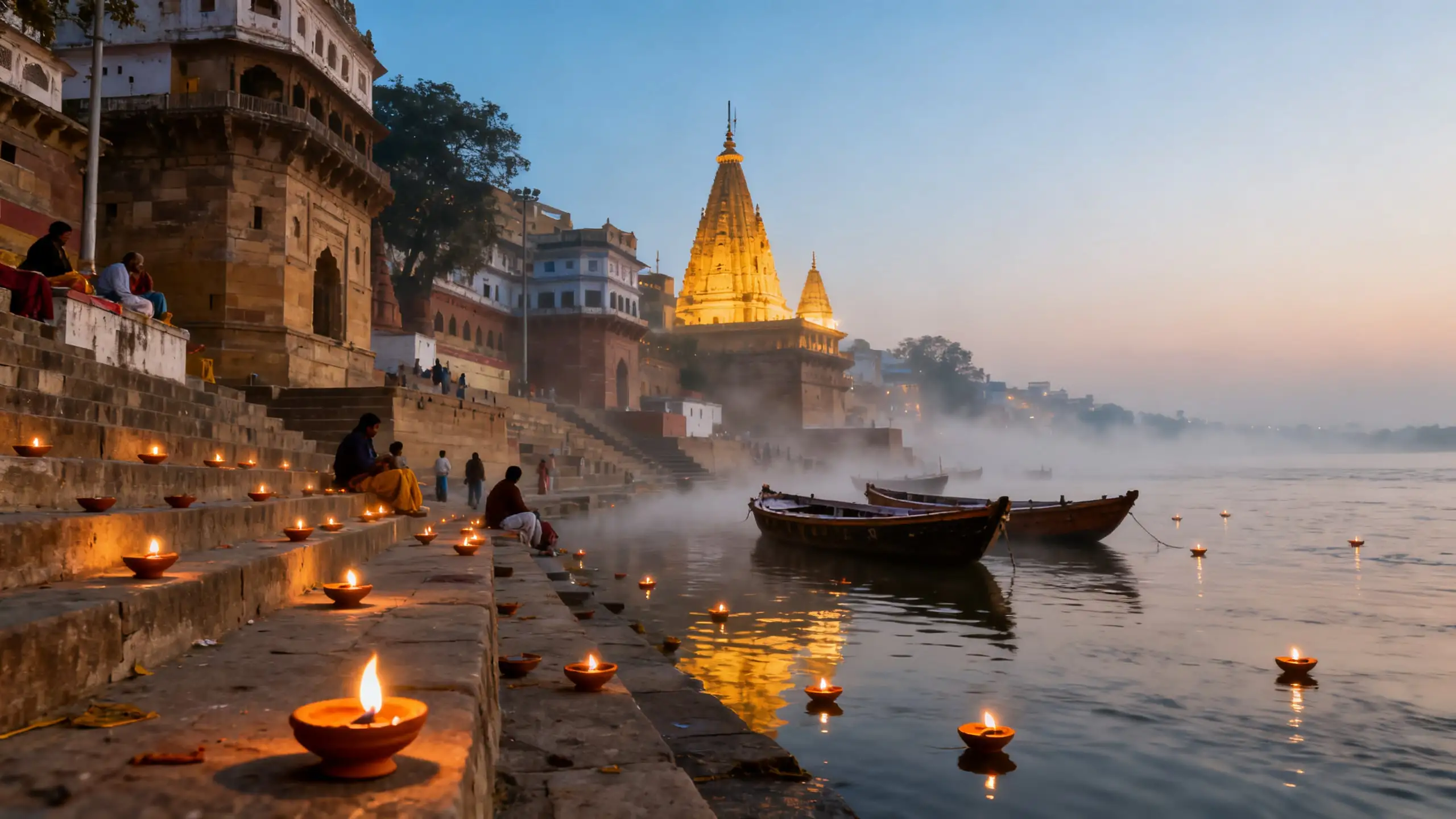
Clay oil lamps floating on the Ganges beside the ghats of Varanasi at dawn, wooden boats in soft mist and temple spires catching the first light

Tirtha · Pilgrimage

Journeys of faith. Arranged with care.

Tirtha plans pilgrimages to Char Dham, Vaishno Devi, the Buddhist circuit and the Golden Temple, paced for the slowest walker in your party, with registration, stays, assisted options and support for elders handled patiently.

Pace & accessibility planner

Comfortable walking in a day, for the slowest walker

Choose a daily walking distance to see how each circuit fits your party.

Four circuits

Sacred routes, paced for your people.

Each circuit lists its route, nights, season and the longest walk it asks of you, with the assisted options that exist on the ground. Use the planner above and every circuit is annotated for your party.

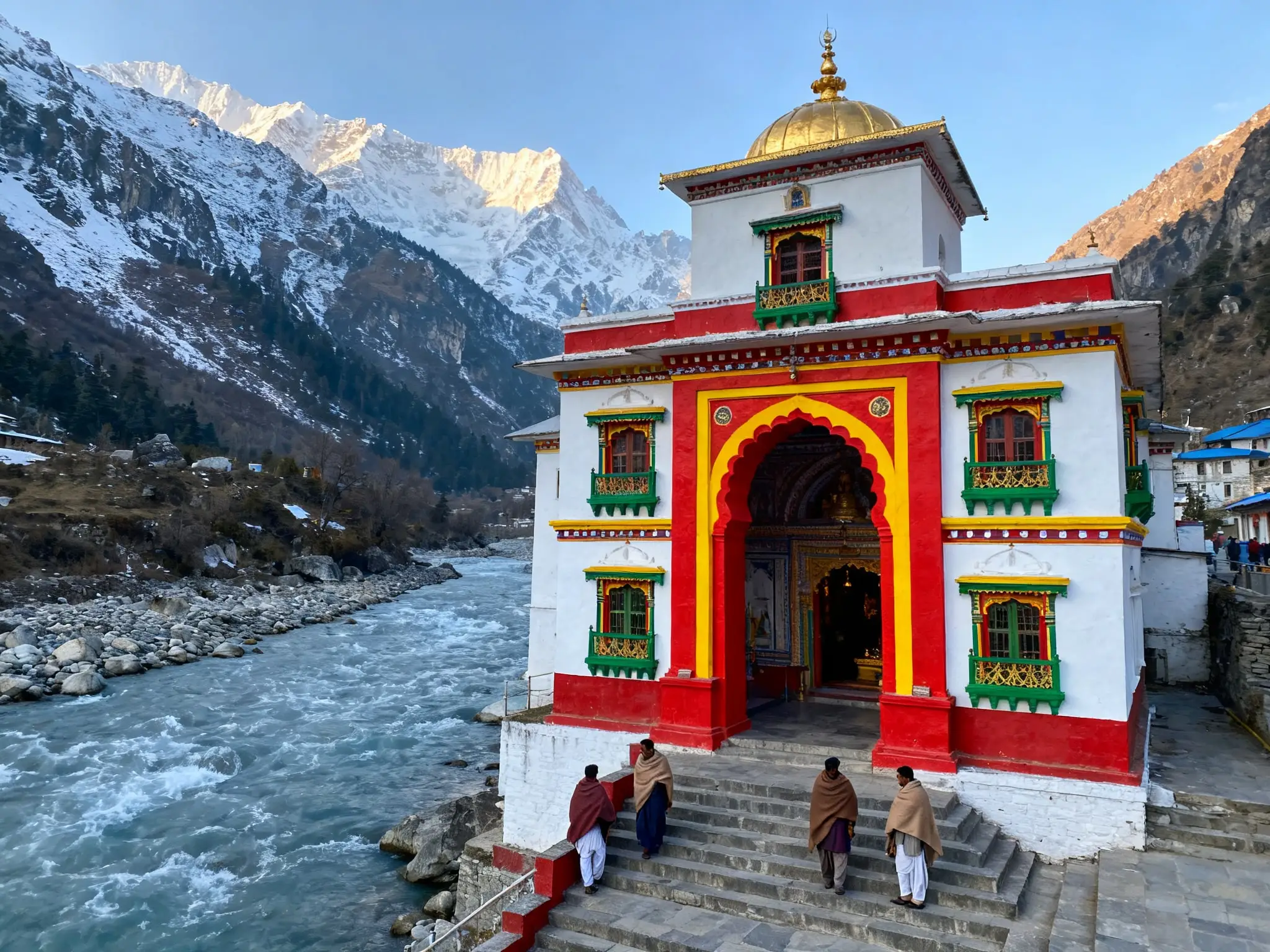
The brightly painted Badrinath temple with its tall arched gateway in red, yellow and green beside the Alaknanda river, snowy Himalaya behind and pilgrims on the steps

Uttarakhand · Garhwal Himalaya

Char Dham Yatra

The four abodes of Yamunotri, Gangotri, Kedarnath and Badrinath, traditionally visited from west to east. Mountain roads, high altitude and two genuine treks make pacing the heart of this yatra.

Route
Haridwar or Dehradun → Barkot for Yamunotri → Uttarkashi for Gangotri → Guptkashi for Kedarnath → Badrinath → Rishikesh
Nights
10 to 11 for all four dhams; 5 to 6 for the Do Dham of Kedarnath and Badrinath
Season
Temples typically open in late April or May and close around October to November, after Diwali
Walking
Kedarnath is about 16–18 km each way from Gaurikund, and Yamunotri about 6 km each way from Janki Chatti. Gangotri and Badrinath are a short walk from the road.
Assisted options
Ponies, palkis and pithoos at Yamunotri and Kedarnath; helicopter services to Kedarnath from the Guptkashi, Phata and Sersi helipads, where operated and permitted
  • Registration with the Uttarakhand authorities is required for every pilgrim. We help you complete it on the official portal; check there for the latest rules each season.
  • Book Kedarnath helicopter seats only through the channel notified by the Uttarakhand government, and be wary of look-alike websites.
  • Kedarnath stands at about 3,580 m. A medical check-up before travel is wise, especially for older pilgrims.

Indicative from, per person ₹58,000
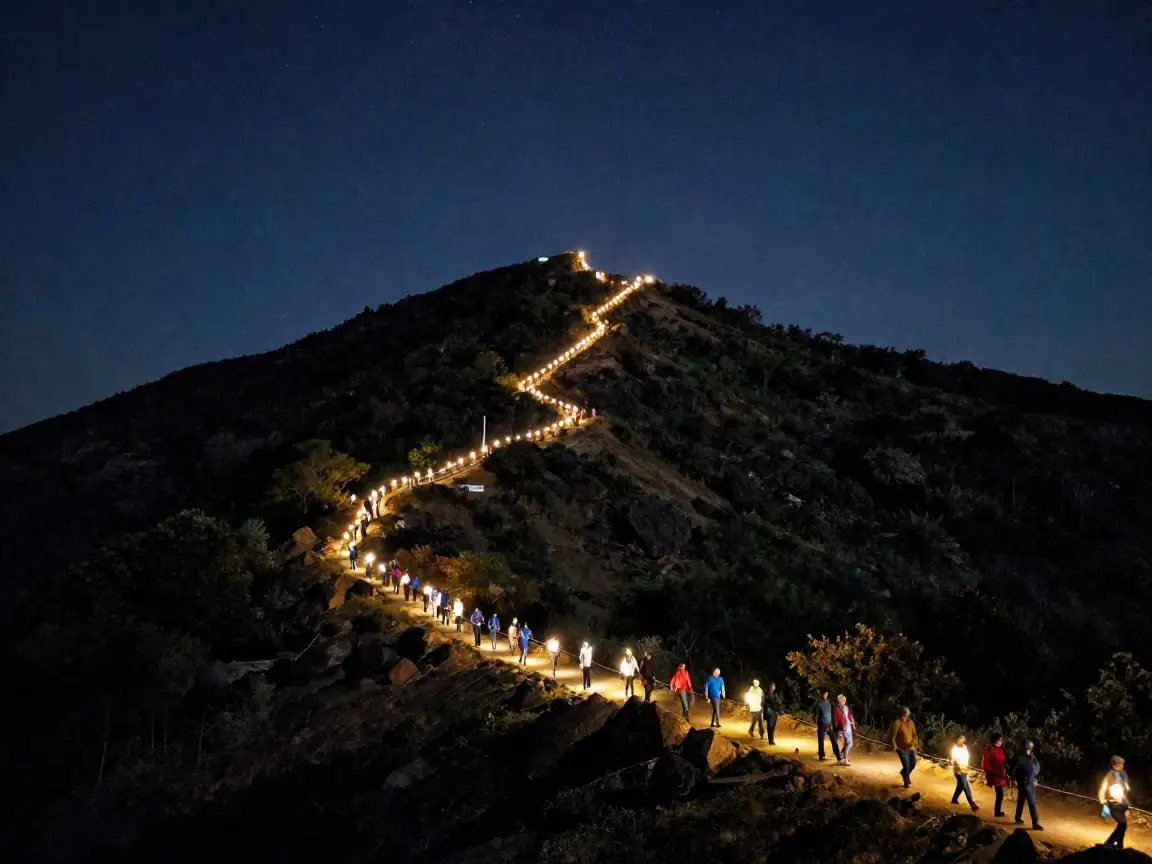
A lamp-lit pilgrimage path winding up the forested Trikuta hills at night, devotees walking beneath a starry sky

Jammu & Kashmir · Trikuta hills

Mata Vaishno Devi

A night or dawn ascent from Katra to the holy cave shrine. The path is paved, lit and open all year, steady rather than technical, and shared with pilgrims of every age.

Route
Delhi → Katra by train, or by air to Jammu → Bhawan → optional Bhairon temple → Katra
Nights
3 from Delhi, or 2 with an overnight train
Season
Open year-round. March to June and September to November are most comfortable; winters are cold and Navratri is very busy
Walking
About 12–14 km each way from Katra to Bhawan, climbing steadily
Assisted options
Ponies, palkis and pithoos along the track, battery cars on part of the route, a helicopter between Katra and Sanjichhat, and a ropeway from Bhawan to Bhairon, where operated and permitted
  • A yatra registration (RFID card) from the Shrine Board is required before the climb. Collect it in Katra or register online in advance.
  • Helicopter seats from Katra are limited. From the Sanjichhat helipad it is still about 2.5 km to Bhawan on foot or by pony.
  • Phones, bags and leather items are usually deposited before darshan; cloakrooms are provided near Bhawan.

Indicative from, per person ₹16,000

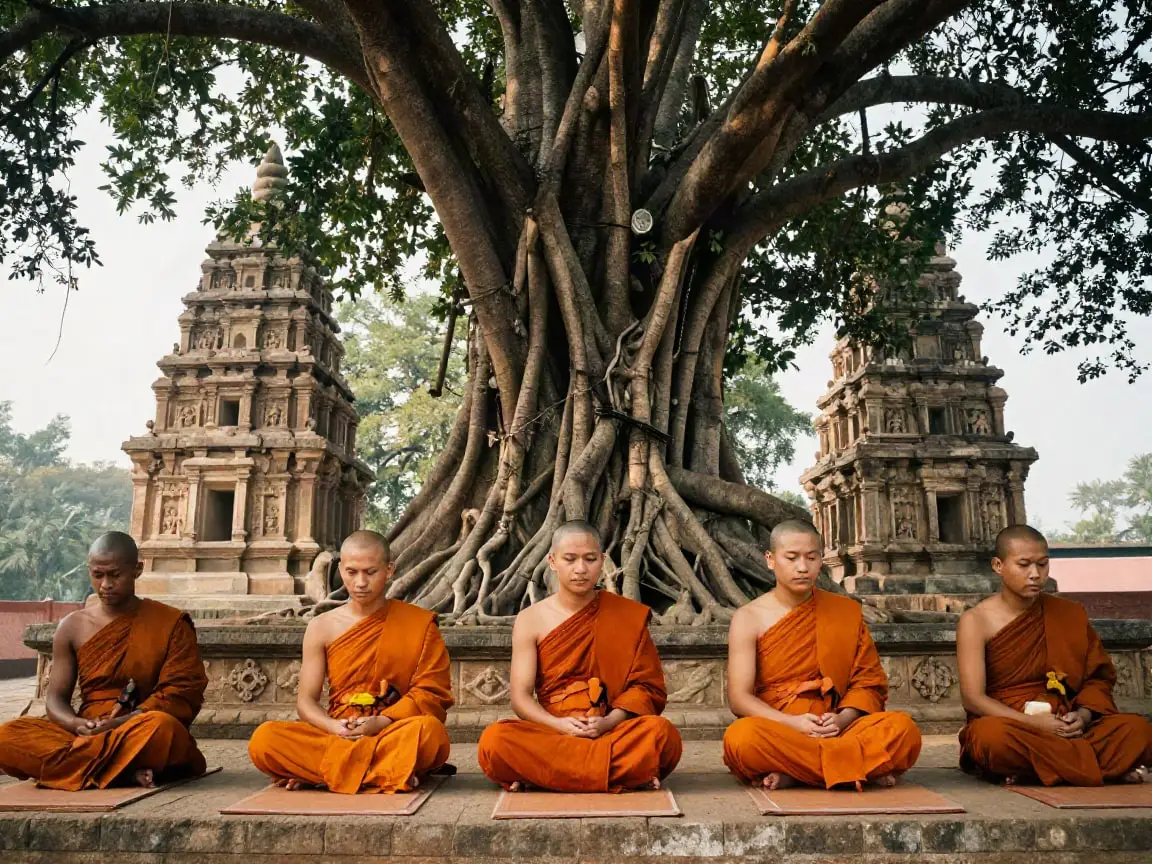
Buddhist monks in saffron robes meditating beneath a great Bodhi tree beside an ancient carved stone temple tower in Bodh Gaya, soft morning light

Bihar · Uttar Pradesh · Nepal

The Buddhist circuit

The places of the Buddha’s life: enlightenment at Bodh Gaya, the first sermon at Sarnath, the final passing at Kushinagar and the birthplace at Lumbini, across the border in Nepal.

Route
Gaya → Bodh Gaya → Rajgir & Nalanda → Varanasi & Sarnath → Kushinagar → Lumbini, Nepal → Gorakhpur or Bhairahawa
Nights
7 to 8
Season
October to March is cool and dry; April to June is very hot, and the monsoon follows
Walking
Short, level walks at each site, usually 1–3 km a day. The effort is in road days of five to seven hours between some sites.
Assisted options
Few are needed; a wheelchair can be arranged for the larger sites, and rest stops are planned on long road days
  • Lumbini is in Nepal. Indian citizens can cross at Sonauli with a valid passport or an Election Commission voter ID card. Other nationalities need a Nepal visa and an Indian visa that allows re-entry. Check the latest official guidance before you travel.
  • Sites are busiest in the winter teaching season and around Buddha Purnima, in April or May.

Indicative from, per person ₹62,000

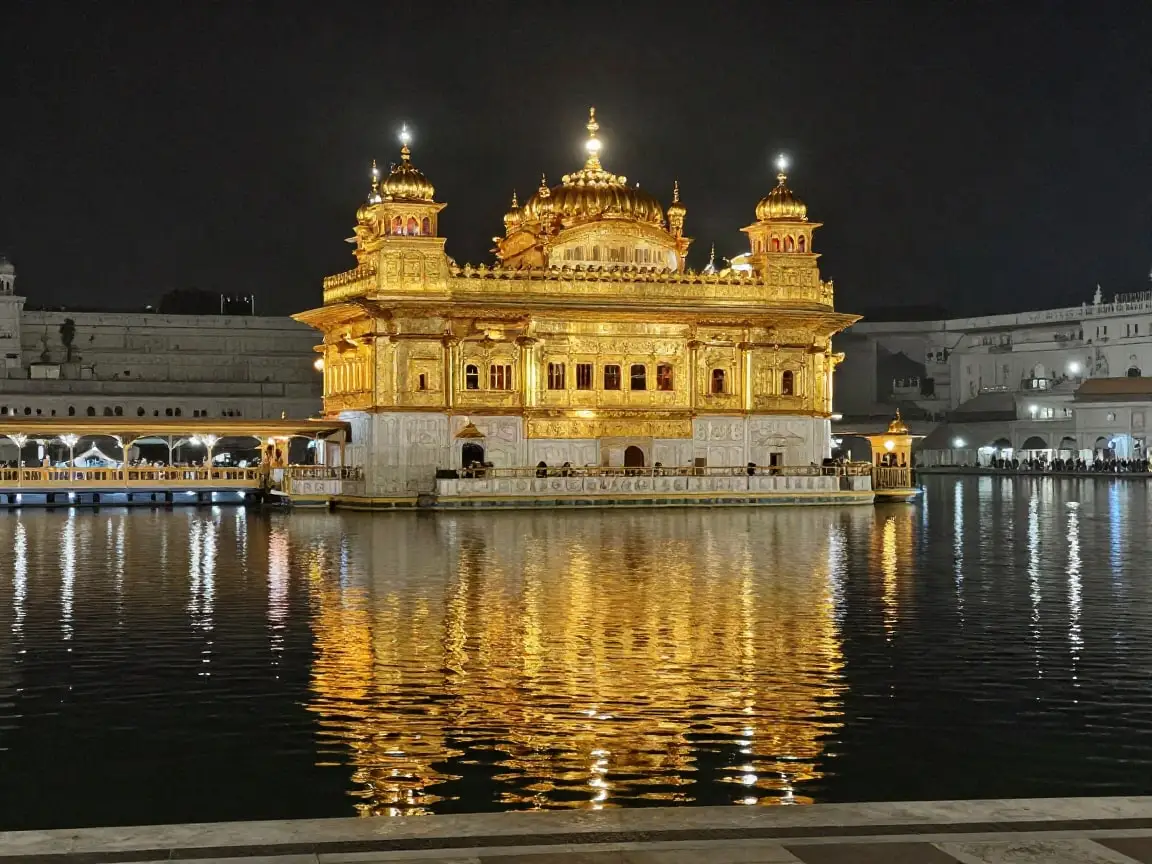
The Golden Temple in Amritsar glowing at night, reflected in the sacred pool and framed by white marble walkways

Punjab · Amritsar

Harmandir Sahib, the Golden Temple

The holiest gurdwara of Sikhism, open to people of every faith, day and night. Time here is measured in the sound of kirtan, the walk around the sarovar and a meal shared in the langar.

Route
Amritsar → Harmandir Sahib → Jallianwala Bagh → Durgiana Temple → the Attari–Wagah border ceremony
Nights
2
Season
Open year-round. October to March is pleasant, though December and January bring dense fog and travel delays, and May and June are very hot
Walking
Short, level walks on marble around the sarovar, barefoot once inside
Assisted options
Level paths throughout; e-rickshaws cover the short distance from most nearby hotels
  • Cover your head and remove your shoes before entering; head scarves are available at the entrance. Tobacco and alcohol are not permitted.
  • The langar serves free meals to every visitor throughout the day, and volunteers are always welcome to help.
  • The late-evening and pre-dawn palki ceremonies, when the Guru Granth Sahib is carried to and from its resting place, are deeply moving to witness.

Indicative from, per person ₹14,000

Indicative estimates per person, twin share, from the nearest major city: stays, road transport and guides. Helicopter seats, ponies and palkis are priced when booked; live prices are confirmed before you pay.

Season calendar

When each shrine welcomes you best.

Weather, altitude and crowds change the character of a yatra month by month. Char Dham is the only circuit here that closes for winter.

Pilgrimage season calendar by month. Best means the most comfortable conditions; Care means possible with planning for heat, cold, fog or monsoon; Closed means temples are shut for winter.
Circuit JanFebMarAprMayJunJulAugSepOctNovDec
Char Dham Closed Closed Closed Opens Best Best Care Care Best Best Closes Closed
Vaishno Devi Care Care Best Best Best Best Care Care Best Best Best Care
Buddhist circuit Best Best Best Care Care Care Care Care Care Best Best Best
Golden Temple Care Best Best Best Care Care Care Care Best Best Best Care

Char Dham: temples typically open in late April or May and close around October to November, after Diwali. July and August bring monsoon landslides and road closures, so we add buffer days and follow official advisories closely.

Vaishno Devi: open year-round. December to February can be very cold at Bhawan, with occasional snow near Bhairon; the monsoon makes the path slippery.

Plains circuits: the Buddhist circuit and Amritsar are hot from April to June. Winter fog in north India can delay early flights and trains, so we avoid tight connections.

For yatra organisers

Leading a group? Lighten the load.

Temple committees, family elders and community groups often carry a whole yatra on one phone. Tirtha’s organiser tools keep rooms, money, vehicles and documents in one calm place.

See every group travel tool
  • Rooming by family

    Rooms assigned by household, elders kept on lower floors, and a printed list ready for each hotel’s front desk.

  • Payments per household

    Each family pays its own share by secure link. The organiser sees who has paid without handling anyone’s card.

  • Vehicles for gentler boarding

    Tempo travellers or coaches with lower steps and grab handles, room for a folding wheelchair, and drivers experienced on hill roads.

  • Emergency contacts

    One sheet with every pilgrim’s emergency contact and the nearest medical facilities along each day’s route, shared with the group lead.

  • Documents, tracked per person

    ID details for Char Dham registration, Vaishno Devi yatra cards, Nepal entry IDs and tickets, with a clear “done” or “missing” for each pilgrim.

  • One shared day plan

    Departure times, darshan or aarti slots booked through official channels, and rest stops, visible to everyone in the group.

Readiness and respect

Prepared in body, at ease in spirit.

Travelling with a wheelchair user or a pilgrim with limited mobility? Our accessible travel planners check each step in advance. For a full season-by-season guide, read the Char Dham Yatra planning guide.

Tirtha FAQ

Pilgrimage questions, answered with care.

Do pilgrims need to register before the Char Dham Yatra?

Yes. The Uttarakhand government requires every pilgrim to register before setting out, through its official registration portal or at designated counters. Registration is checked at points along the route, so carry it with you. The process and requirements can change from season to season, so confirm the current rules on the official portal; we help each member of your party complete it.

How long is the trek to Kedarnath, and are there alternatives to walking?

The trek is about 16 to 18 km each way from Gaurikund and climbs to roughly 3,580 m, so most pilgrims take most of a day to go up. Ponies, palkis and pithoos are available on the route, and helicopter services fly from helipads near Guptkashi, Phata and Sersi when they are operating and permitted. Book helicopter seats only through the official channel notified by the state.

Can elderly parents manage the Vaishno Devi yatra?

Many do. The path from Katra to Bhawan is about 12 to 14 km each way, paved and lit, with places to rest. Elders can use a pony or palki, battery cars on part of the route, or the helicopter to Sanjichhat, which leaves about 2.5 km to the shrine. We plan the climb for the cooler hours and keep a night free for recovery.

Is a passport needed for Lumbini on the Buddhist circuit?

For Indian citizens, a valid passport or Election Commission voter ID card is accepted at the Sonauli crossing into Nepal. Travellers of other nationalities need a Nepal visa and an Indian visa that permits re-entry, so a single-entry Indian visa is not enough. Rules change, so check the latest guidance from both governments; our visa team can help.

When do the Char Dham temples open and close each year?

Dates are announced each year. Yamunotri and Gangotri usually open on Akshaya Tritiya in late April or May; Kedarnath’s date is announced on Mahashivratri and Badrinath’s on Basant Panchami. Kedarnath and Yamunotri usually close on Bhai Dooj after Diwali, Gangotri around the same time, and Badrinath in mid to late November.

What should first-time visitors know before going to the Golden Temple?

Everyone is welcome. Cover your head, remove your shoes and wash your feet at the entrance; scarves are provided. Tobacco and alcohol are not allowed. The langar serves free meals to all, and early mornings and late evenings are calmer and cooler underfoot.

Tirtha

The journey matters as much as the destination.

Tell us who is travelling, how far each person can comfortably walk and the dates you have in mind. We shape the yatra around them, not the other way round.

ATLAS

InfiniaTrips' own travel AI

Opening ATLAS…

Your world settings

Local by instinct. Global by design.