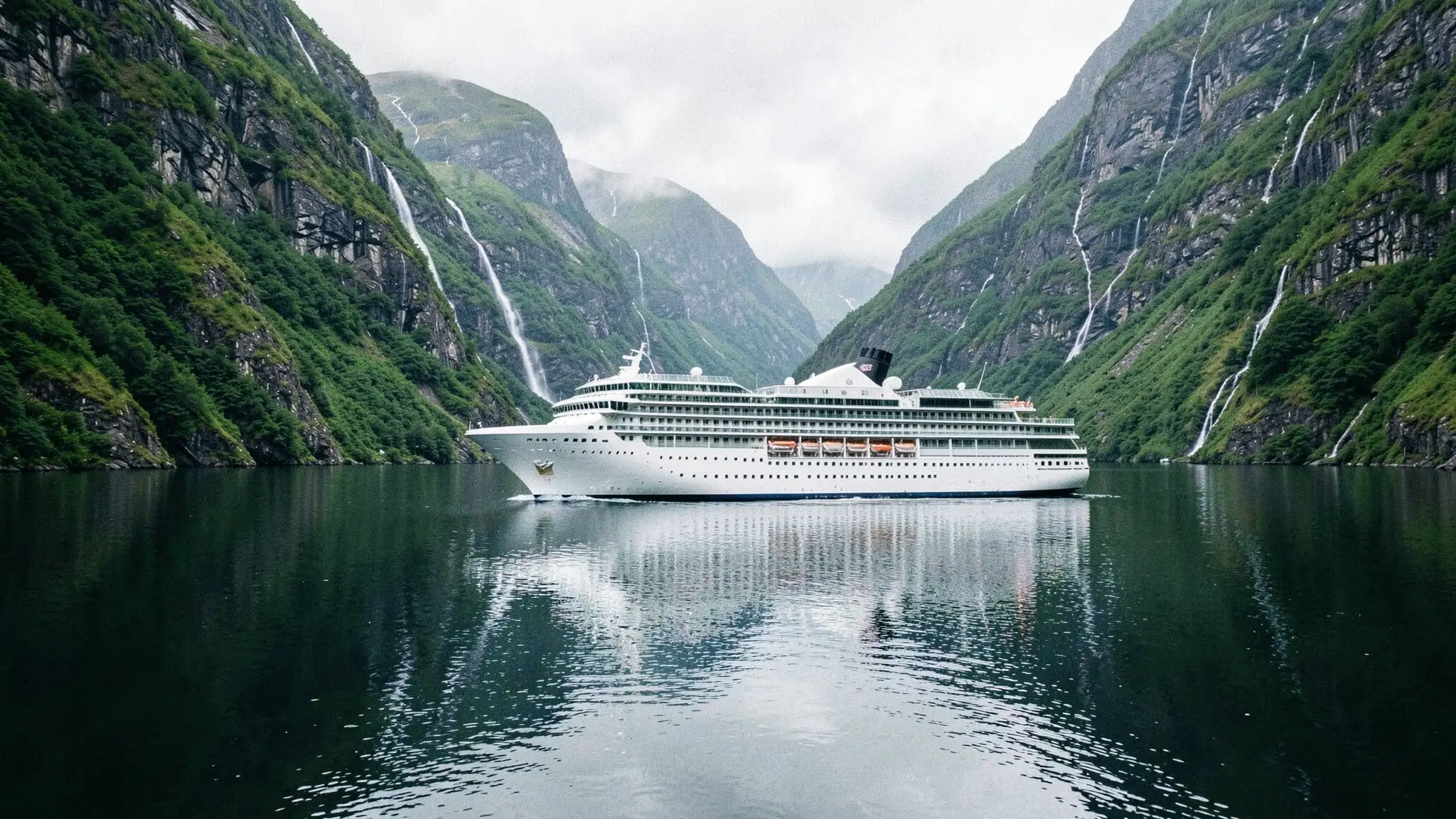
Cruises
Let the sea set the pace.
Find ocean, river, expedition and coastal India cruises by region, month, length and cabin, and see exactly what each fare includes before you choose.
Cruise finder
Cruise types
Four kinds of voyage. Different things included.
The price of a cruise covers more than the cabin, but what “more” means changes with the kind of ship. Read the matrix before comparing fares.
-
Ocean
Large ships with many restaurants, pools and evening shows, calling at a port most days with some days at sea. Sailings run from two-night getaways to long voyages.
-
River
Small ships that moor in the heart of towns, with a guided visit at most stops. Europe’s Rhine, Danube and Douro, and in India the Ganga and Brahmaputra.
-
Expedition
Small, often ice-strengthened ships with naturalist guides, landing by inflatable boat where there is no port: Antarctica, the Arctic and remote islands.
-
Coastal India
Short sailings from Indian ports such as Mumbai, Goa, Kochi and Chennai, some calling at Lakshadweep or Sri Lanka. Schedules shift with the monsoon, so ports and dates vary by season.
| On board | Ocean | River | Expedition | Coastal India |
|---|---|---|---|---|
| Main restaurant meals | Usually included | Usually included | Usually included | Usually included |
| Tea, coffee and water | Usually included | Usually included | Usually included | Usually included |
| Alcoholic drinks | Usually extra | Varies by line | Varies by line | Usually extra |
| Specialty dining | Usually extra | Varies by line | Varies by line | Usually extra |
| Wi-Fi | Usually extra | Usually included | Varies by line | Usually extra |
| Shore excursions | Usually extra | Usually included | Usually included | Usually extra |
| Gratuities or service charge | Varies by line | Varies by line | Varies by line | Varies by line |
| Onboard entertainment and talks | Usually included | Usually included | Usually included | Usually included |
A general guide, not a promise for any one line: “all-inclusive” means different things on different ships. Each sailing lists its own inclusions, and port taxes are always in the total we show.
Cabin types
Where you sleep shapes the voyage.
Four broad categories cover almost every ship afloat. Position matters as much as category: cabins low and midship feel the least motion.
- 01
Interior
No window and the lowest fares. The darkest, quietest sleep on board.
Choose it if you will be ashore or on deck most of the day.
- 02
Ocean-view
A fixed window or porthole that does not open. Some categories have a view partly blocked by lifeboats, and they are labelled as obstructed.
Choose it if you want daylight and the sea without paying for a balcony.
- 03
Balcony
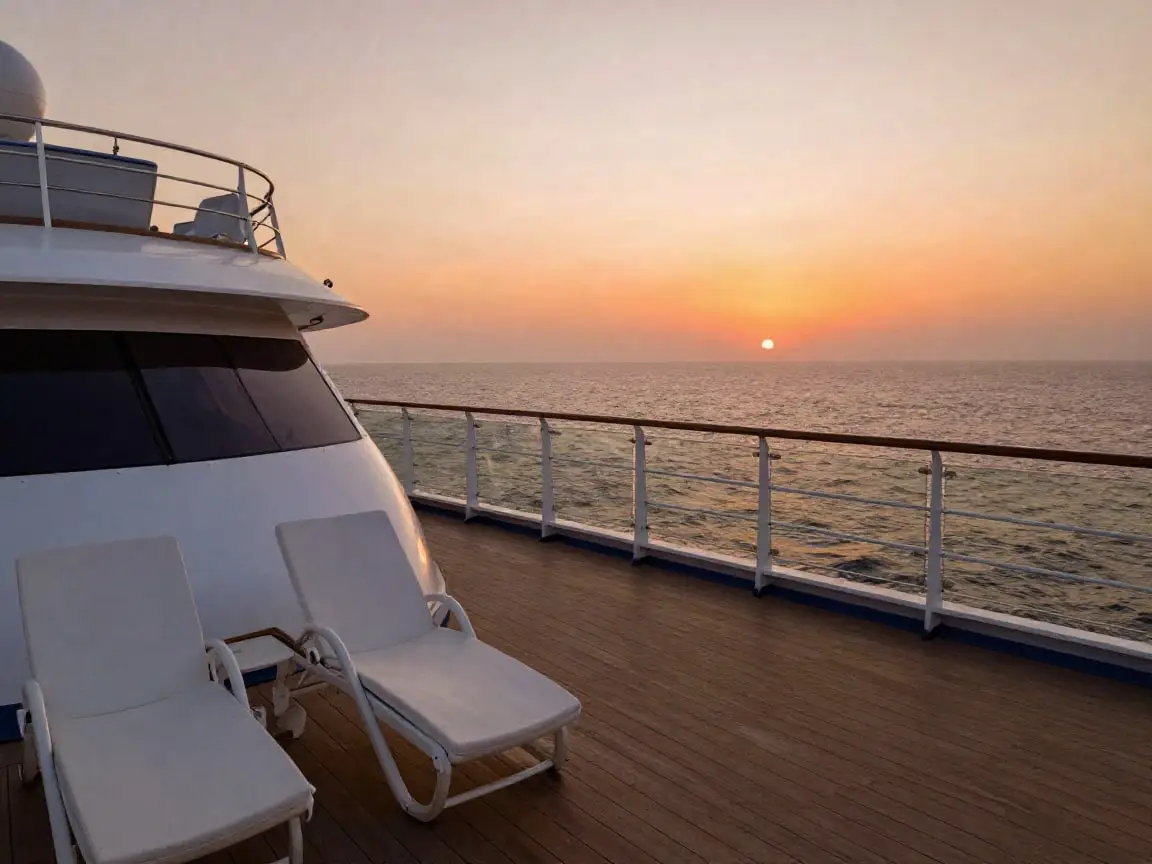
Your own outdoor space with chairs. On river ships, a “French balcony” is a full-height sliding door with a railing, not a sit-out.
Choose it if scenery is the point: fjords, coastlines, sail-ins.
- 04
Suite
More space, a separate sitting area and often priority boarding. Extra inclusions, such as drinks or a butler, vary widely by line.
Choose it if it is a celebration, or you want room to spread out on a longer voyage.
Embarkation
Board with every paper in order.
Check-in at the terminal typically closes a few hours before the ship sails, and a missing document cannot be fixed at the gangway. Have these ready.
- Passport valid for at least six months beyond the end of an international voyage. For domestic coastal sailings, Indian citizens carry a government photo ID.
- Visas for each country where you plan to go ashore, unless that port allows cruise passengers a visa-free visit. Check the latest official guidance.
- Cruise ticket and boarding pass, with online check-in and any health declaration the line asks for completed before you arrive.
- Permits for restricted islands. Visiting Lakshadweep requires an entry permit; on cruises, the operator commonly arranges it for passengers, so confirm this for your sailing.
- Consent letter for minors travelling without both parents or legal guardians, if the line or a port requires it.
- Travel insurance that covers medical care at sea and evacuation, which can be very costly. See our travel insurance guide.
Cruise FAQ
Cruising, clearly charted.
Are port charges and gratuities included in a cruise price?
Port taxes and government fees are included in every total we show. Gratuities differ by line: some include them, some add a daily service charge per guest to your onboard account, and some leave tipping to you. We list which applies to each sailing before you book.
Which cabin should I choose if I am prone to seasickness?
A cabin low down and in the middle of the ship moves least, so a midship cabin on a lower deck is usually the steadiest. A window or balcony also helps, because looking at the horizon eases motion sickness. For medicines, ask a doctor or pharmacist before you sail.
Do I need a visa for every country a cruise visits?
Often, yes, if you plan to go ashore. Some ports allow cruise passengers short visits without a separate visa, and others do not. Rules depend on your passport and change from time to time, so check the latest official guidance for every port; our visa assistance team can help.
When do cruises from Indian ports usually sail?
Most sailings from Indian ports run outside the peak of the south-west monsoon, when seas off the west coast are roughest. Some ships reposition to other ports during those months. Dates and itineraries change each season, so search by month to see what is actually scheduled.
What is the difference between a balcony and a French balcony?
A balcony is a private outdoor space with room for chairs. A French balcony, common on river ships, is a floor-to-ceiling door that opens to a railing: fresh air and a view, but no space to sit outside.
Can I cruise while pregnant or with a baby?
Many lines will not carry guests who will be 24 weeks pregnant or more at any point during the voyage, and ask for a doctor’s note for earlier stages. Infants usually need to be at least six months old, and sometimes twelve months for longer voyages. Each line’s exact policy is shown before booking.
Sea and shore
The ship is half the story. Plan both shores.
ATLAS finds the flight to the port and a hotel for the night before you sail, so a delayed flight still leaves a margin before boarding. A travel designer can arrange the transfer to the terminal.