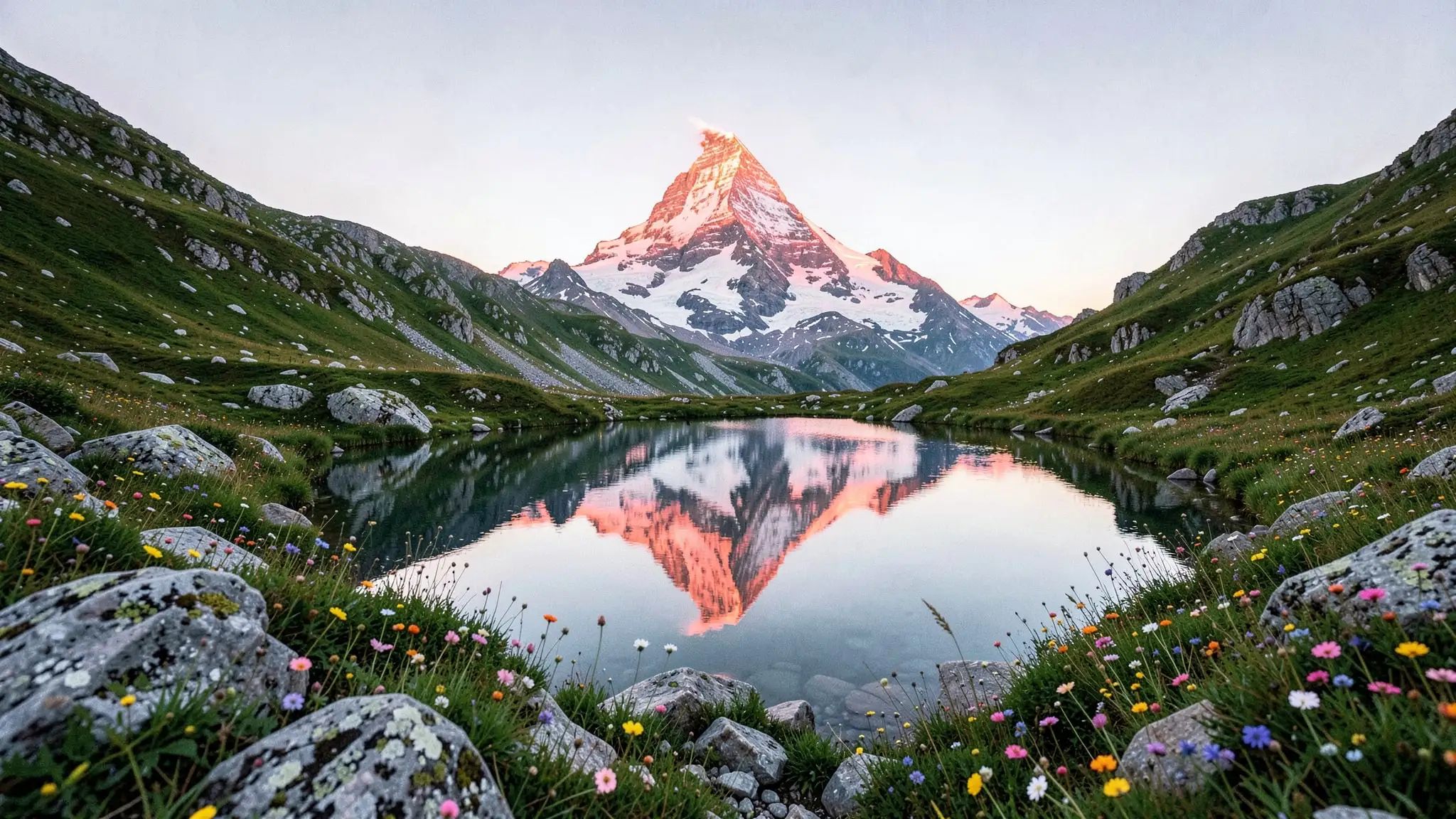
Central Europe
Switzerland, by rail and lake.
Glacier valleys, lakeside old towns and some of the world’s most scenic railways.
Central Europe
Small country, vast scenery.
Switzerland packs glaciers, lakes and car-free mountain villages into a country small enough to cross by train in a few hours. Summer (June to September) is best for hiking and lakes, winter (December to March) for snow, and Zurich is about 8.5 to 9 hours non-stop from Delhi or Mumbai. Trains, boats and mountain railways connect almost everything, so most visitors never need a car.
Switzerland is in the Schengen area, so start with our document checklist and the travel insurance a Schengen visa requires, where one applies. Then compare non-stop flights to Zurich and plan the rail days before booking hotels.
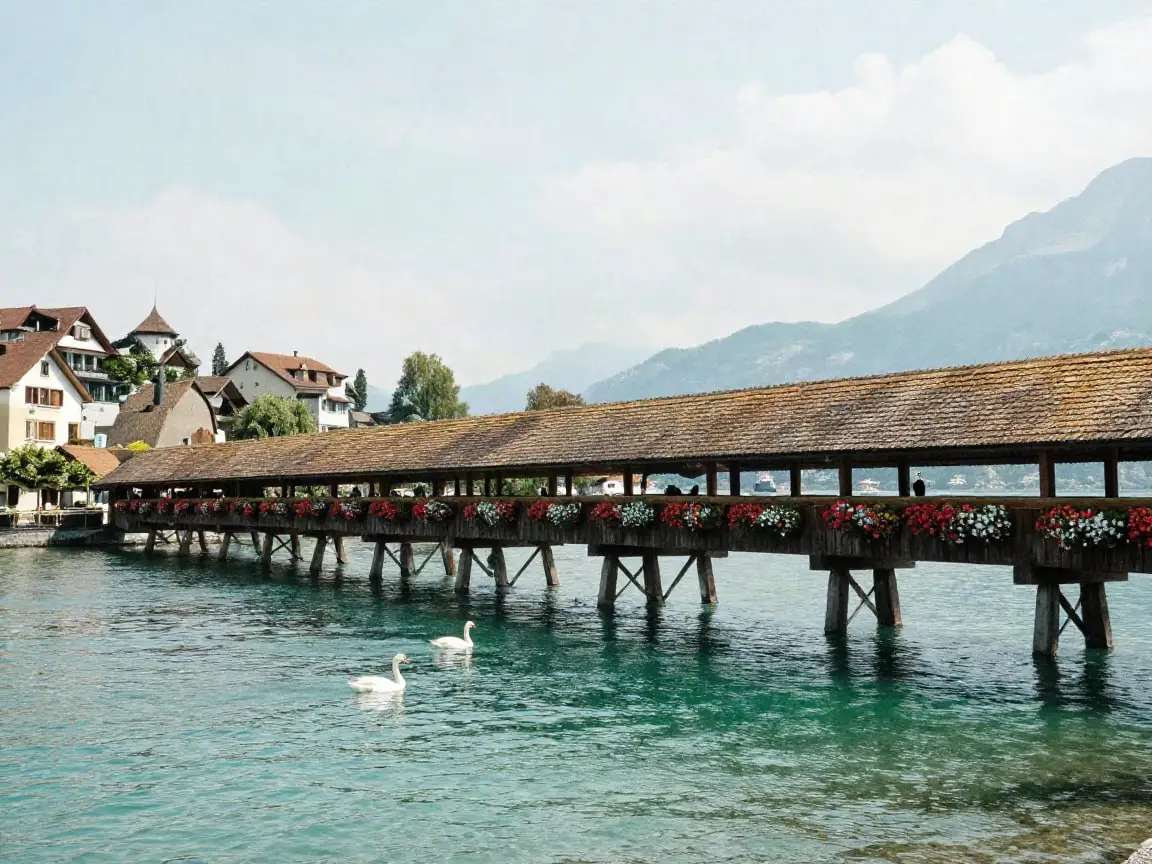
Lakeside towns
Old towns built at the water’s edge.
Lucerne’s Chapel Bridge has crossed the Reuss since the 14th century, its roof lined with painted panels, many restored after a fire in 1993. Swans drift below, and the old town’s painted facades and flower boxes run right down to the river.
Across the country the pattern repeats: Bern’s arcaded old town, a UNESCO World Heritage Site inside a loop of the Aare, or Montreux and the Château de Chillon on Lake Geneva. Many are an easy day trip by train from one another, so you can stay put and still see a great deal.
Scenic trains
The window seat is the attraction.
Switzerland’s panoramic trains turn a transfer into a day out. They are slower than regular services on purpose, and their large-window carriages need a seat reservation.
- 01 About 8 h
Glacier Express
Zermatt ↔ St. Moritz or Davos
The slow classic: 291 bridges, 91 tunnels and the Oberalp Pass at just over 2,000 m.
Most of the year; pauses for a few weeks in late autumn
- 02 About 4 h from Chur
Bernina Express
Chur or St. Moritz ↔ Tirano (Italy)
Climbs over the Bernina Pass on the UNESCO-listed Albula and Bernina lines, past glaciers to palm trees.
Year-round
- 03 About 3 h 15 min
GoldenPass Express
Montreux ↔ Interlaken
Since 2022 runs through without a change of train, from Lake Geneva vineyards to the Bernese Oberland.
Year-round
- 04 About 5.5 h, boat and train
Gotthard Panorama Express
Lucerne ↔ Lugano
A paddle-steamer or motor-ship crossing of Lake Lucerne, then the historic Gotthard rail line south to Ticino.
Spring to autumn
Reservations and passes
Panoramic trains need a seat reservation with a supplement, even with a Swiss Travel Pass, and popular summer departures sell out weeks ahead. Regular trains on the same lines usually need no reservation and can be cheaper.
Which side to sit
Views change sides along most routes, and panoramic windows reach into the roof, so any seat sees a great deal. On regular trains, a quick look at the route map before boarding helps.
Check before you travel
Timetables, journey times and seasonal operation are set by the railways and can change. Times above are typical and rounded.
Sample itinerary
Four days, lake to glacier.
Lucerne and the Bernese Oberland in four days, with one mountain a day and little time in transit.
-
Day 1
Zurich to Lucerne
Take the train from Zurich Airport to Lucerne, about an hour. Walk the Chapel Bridge and the old town, then a short evening cruise on Lake Lucerne.
-
Day 2
The Pilatus round trip
Sail to Alpnachstad, ride the world’s steepest cogwheel railway up Mount Pilatus and come down by cable car to Kriens. In winter, go up and down by cable car.
-
Day 3
Into the Oberland
Travel to Interlaken, about two hours on the Luzern–Interlaken Express, then on to Lauterbrunnen to walk beneath Staubbach Falls.
-
Day 4
Glacier views, then home
Ride up to Jungfraujoch at 3,454 metres for views over the Aletsch Glacier, or choose Grindelwald First for an easier high walk. Back to Zurich in the evening.
Sample plan · Mountain railways and boats run reduced timetables outside summer. Adjust it with ATLAS
Where to go
Five regions, one rail network.
Two well-chosen bases cover more of Switzerland than five rushed ones, thanks to frequent trains and boats.
- 01
Bernese Oberland
Interlaken between two lakes, the waterfall valley of Lauterbrunnen, Grindelwald beneath the Eiger and the railway up to Jungfraujoch.
Classic Alps, hiking - 02
Lucerne & Central Switzerland
A lakeside old town with mountain excursions on its doorstep: Pilatus, Rigi and Titlis.
First visits, easy day trips - 03
Zermatt & Valais
A car-free village beneath the Matterhorn, with the Gornergrat railway, glacier skiing and high trails.
Matterhorn views, skiing - 04
Lake Geneva region
Montreux, the Château de Chillon and the terraced Lavaux vineyards, a UNESCO World Heritage Site above the lake.
Lakes, wine, a gentler pace - 05
Graubünden & Engadin
St. Moritz, the Swiss National Park and the Albula and Bernina railway lines, also UNESCO-listed.
Scenic rail, winter sport
Experiences
Classic Swiss, done well.
The classics are classics for a reason. These are the ones worth planning around.
More experiences worldwide-
The Glacier Express
About eight hours between Zermatt and St. Moritz in panoramic carriages, crossing the Oberalp Pass at just over 2,000 metres.
-
Jungfraujoch
Europe’s highest railway station, at 3,454 metres, looking over the Aletsch Glacier, the longest in the Alps.
-
A paddle steamer on the lake
Historic paddle steamers still sail Lake Lucerne and Lake Geneva through the warmer months.
-
A Lavaux vineyard walk
Stone-walled terraces drop steeply to Lake Geneva between Lausanne and Montreux, with village wine cellars along the way.
-
Fondue in a mountain hut
Melted cheese, bread and a view. In winter many mountain restaurants serve fondue and raclette after a day on the slopes.
Beyond Switzerland
- Dubai Best: November to March ≈ 3.5–4 h from Delhi
- Bali Best: April to October (dry season) Usually one stop
- Japan Best: Late March to May; October to November ≈ 7.5–8 h from Delhi
- Maldives Best: December to April ≈ 1–1.5 h from Bengaluru
- Ladakh Best: June to September ≈ 1 h 20 m from Delhi
Switzerland FAQ
Swiss travel, simply explained.
When can I see snow in Switzerland?
Valley towns usually have their best snow cover from December to March. High points such as Jungfraujoch, Titlis and the Matterhorn Glacier Paradise above Zermatt have snow and ice all year, so even a summer trip can include a snowy afternoon. Dress warmly at altitude, whatever the month.
How many days do I need for a first trip to Switzerland?
Six to eight days lets you base yourself in two regions, such as Lucerne and the Bernese Oberland, without rushing, with two more for Zermatt or a panoramic train. Four days works for one or two bases if you keep transfers short.
Is a Swiss Travel Pass worth buying?
It depends on how much you travel. The pass covers trains, buses and boats across the network on consecutive or flexible days and includes or discounts many mountain railways, so it suits itineraries with long rail days and several excursions. For slower trips, a Half Fare Card or advance Supersaver tickets can cost less. Compare against your actual route before you buy.
How do I get from Zurich Airport to Lucerne or Interlaken?
Zurich Airport has its own railway station beneath the terminal. Lucerne is about an hour away, and Interlaken about two to two and a half hours, usually with one change. Swiss luggage-forwarding services can send bags ahead so you travel light between hotels.
Which currency is used in Switzerland?
The Swiss franc (CHF), not the euro, even though Switzerland borders euro countries. Cards and mobile payments are accepted almost everywhere. Some shops and stations take euros, usually at their own exchange rate and with change given in francs.
Plan Switzerland
Lakes by boat, peaks by train. Route your Switzerland.
ATLAS suggests your bases and finds the flights and stays for them. Our team can weigh a travel pass against point-to-point fares and reserve the panoramic seats.